

Suicidal thoughts
More common than you might think.
These are unpleasant thoughts and feelings. Often people don’t want to think about them, talk about them, or tell others.
But they are extremely common. Most people think about running away or escaping from unpleasant situations, and possibly 15% to 25% of people report having passing suicidal thoughts at one time or another.
Even just reading this page might create some uneasy feelings. Do you notice that you would prefer to avoid thinking about these things?
There are many helpful responses
-
Questions to ask
Simple questions to guide the next steps.
-
A practical action plan
There are some simple steps you can take to help. These plans work.
-
Getting unstuck
There are many psychological patterns that can be addressed. This has an impact.
-
Connection
Following these strategies can give people more meaning, more connection and a greater sense of feeling understood. That is a good reason.
01 · Questions to ask
When you’re worried about yourself or someone else.
Use these simple questions to guide your conversation and clarify intentions. They will help you understand if there are thoughts of suicide, a specific plan, or an immediate readiness to act, so we can decide how to best help.
Another strategy is to take a deeper look at the ongoing thoughts and attitudes driving the desire to escape or end it all. Some of the most helpful thoughts to ask about are below, from the Brief Suicide Cognitions Scale (B-SCS-5).
Are you having…
Thoughts of escape or running away
Specific thoughts of ending your life
Actually thinking of ways of doing this
Your overall intentions
Whether you have acted on these thoughts
If there is an active plan and a strong desire to act, immediately create a safety plan and seek professional help to break the pattern of self-harm thoughts.
Make an immediate appointment with a mental health professional, go directly to your GP, an urgent care clinic, or the nearest emergency department, and ask specifically for this support.
A quick check-in · B-SCS-5
Some of the most helpful thoughts to ask about.
Choose how much you agree with each statement right now. If you’re helping someone else, you could go through it together.
Statement 1 of 5
Choose an answer to continue
Your total
0 / 25
Higher scores can be associated with ways of thinking that might make a person more vulnerable in times of intense crisis. This is a way of noticing your thoughts, not a diagnosis.
If there is an active plan and a strong desire to act, immediately create a safety plan and seek professional help to break the pattern of self-harm thoughts.
Make an immediate appointment with a mental health professional, go directly to your GP, an urgent care clinic, or the nearest emergency department, and ask specifically for this support.
Your answers aren’t saved or sent anywhere.
From the Brief Suicide Cognitions Scale (B-SCS-5). View the original scale.
02 · Make a practical action plan
A simple plan for the hardest moments.
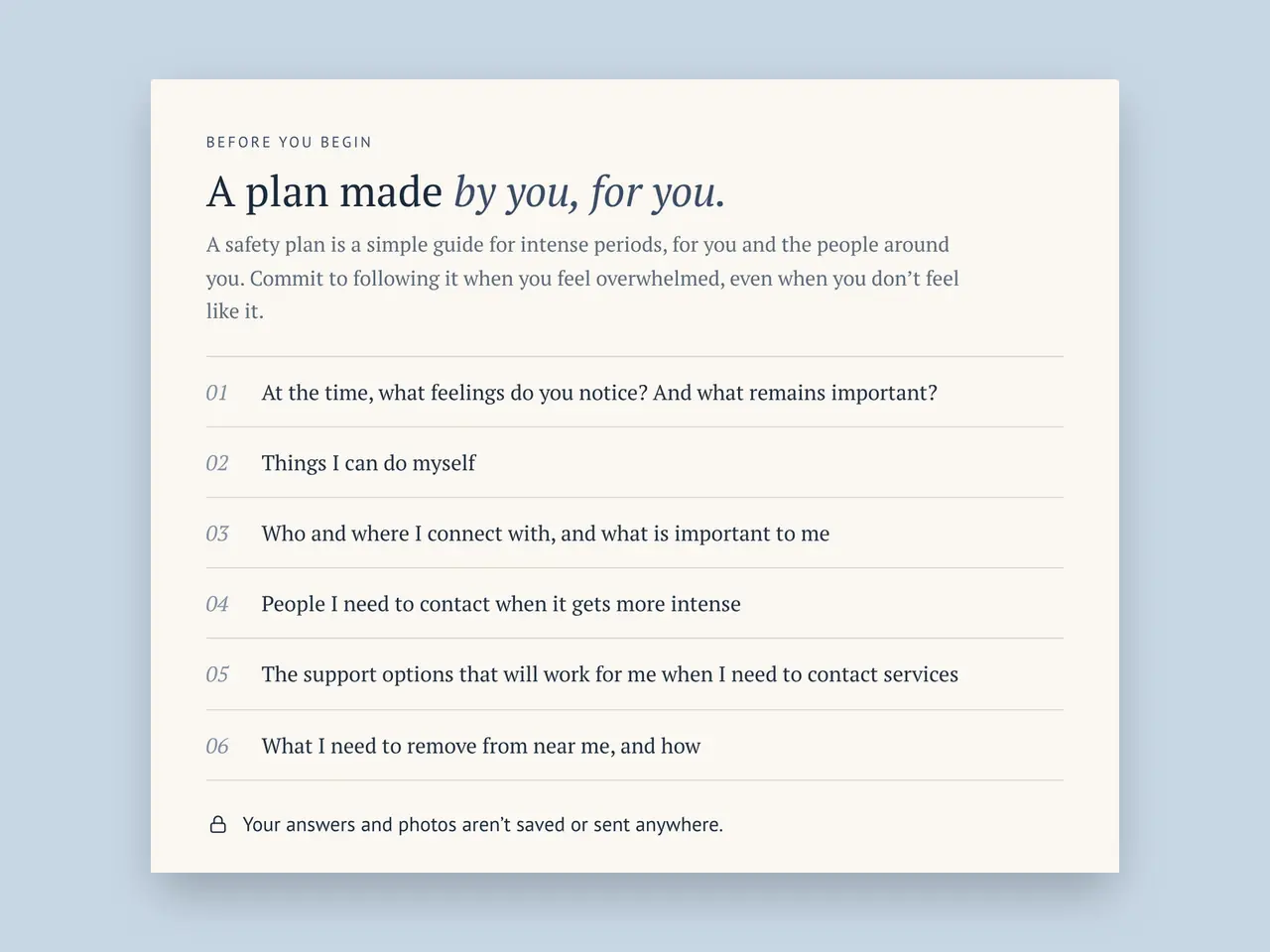
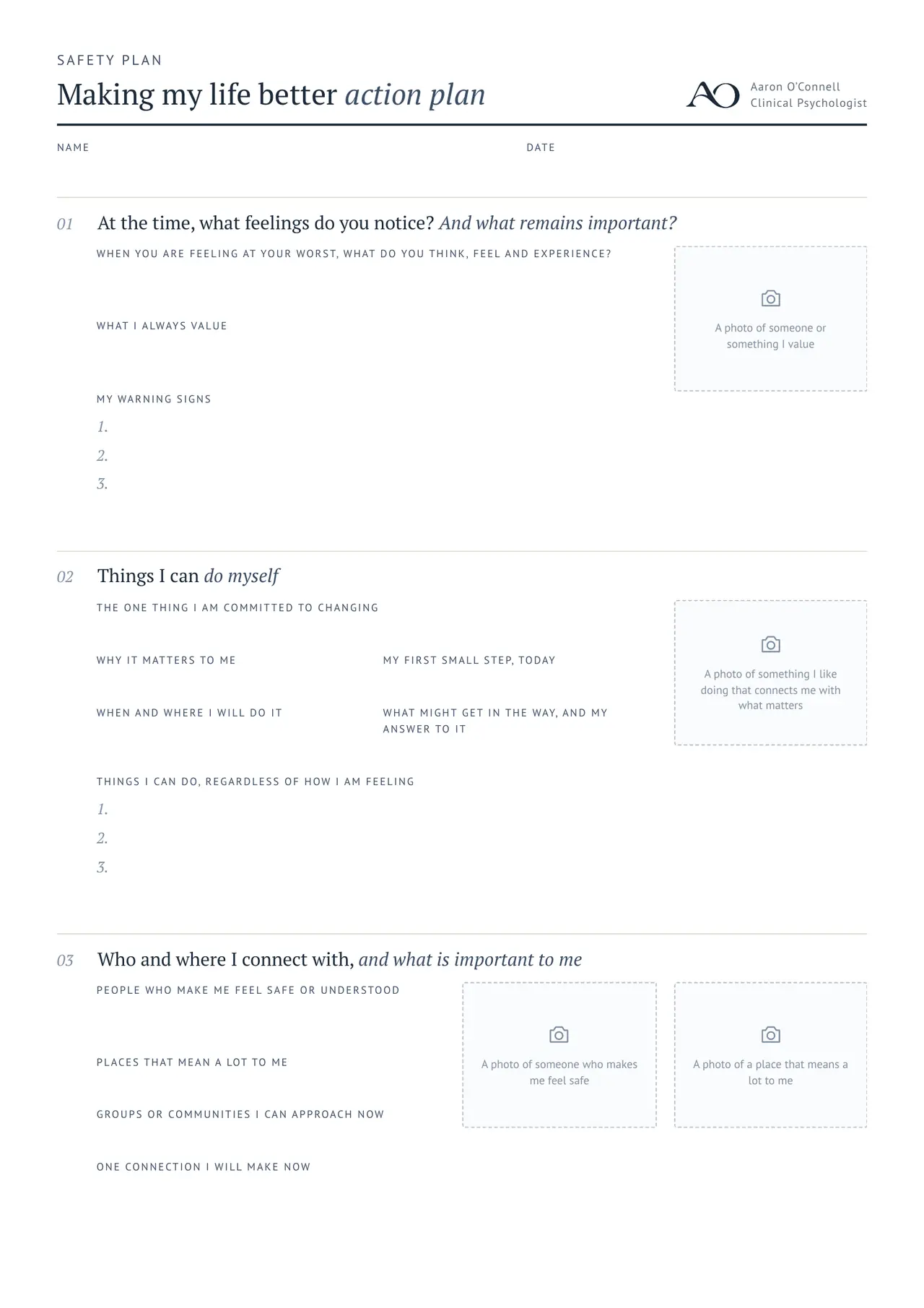
Six steps, from on your own to the most support
- When
During intense periods: a simple guide for you and others to use.
- Commit
Follow that simple plan when you’re overwhelmed, even when you won’t feel like it.
- Share
With important and trusted people, and give them direct instructions on what you will need.
- Stages
Build in different levels or stages of help.
- 1
List your warning signs
How you think and feel when in crisis.
- 2
Coping strategies
Things to do on your own.
- 3
People and places
How to be around people and places.
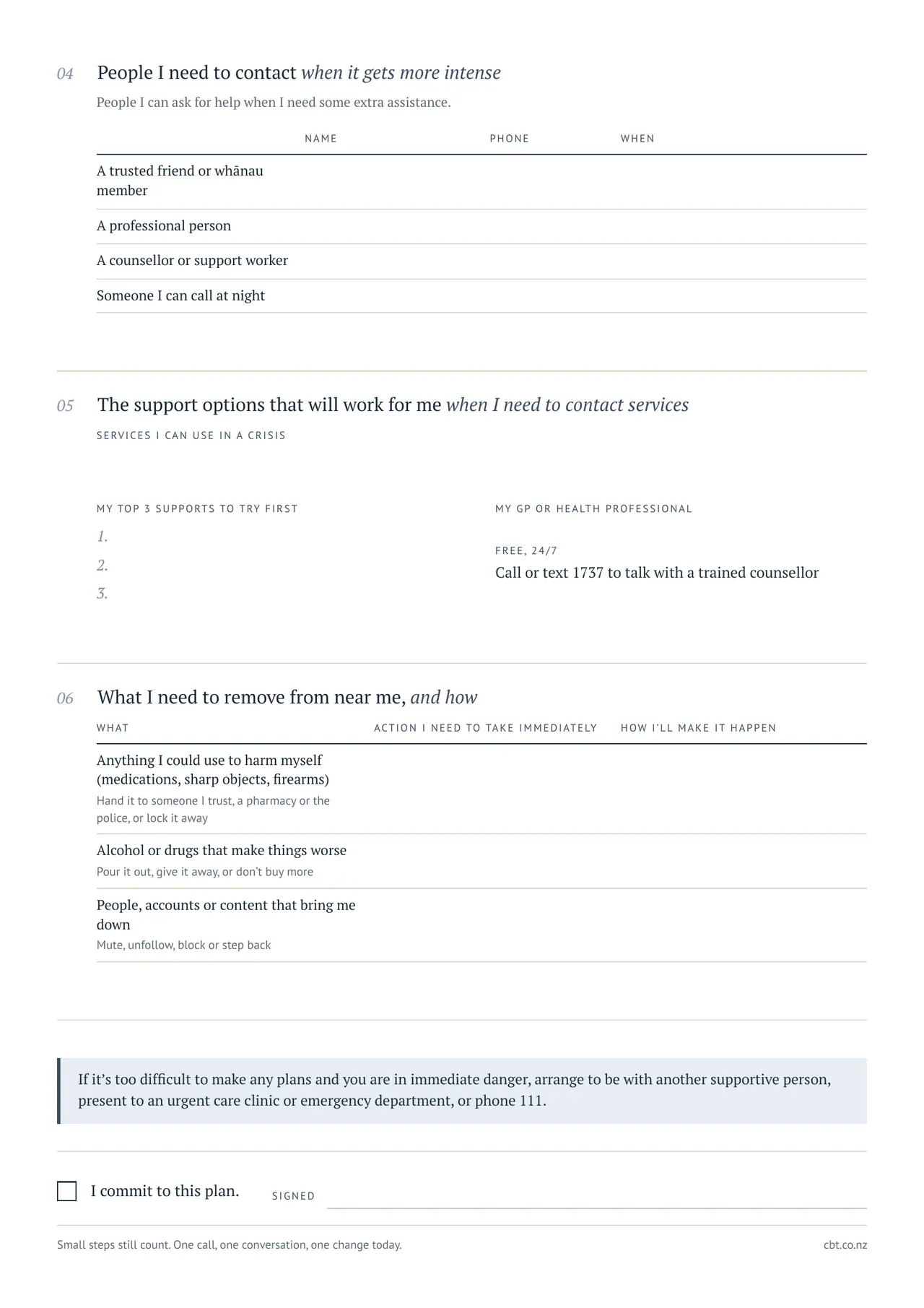
- 4
Ask your support network
How to ask the people around you for help.
- 5
Professional support
Contact the best professionals and support services.
- 6
Make things safer
Remove risky items and situations.
This is the most commonly cited approach, known as “safety planning interventions”. The best known is the Stanley–Brown Safety Plan. It works.
Create your safety plan
Make your free safety plan.
Work through the six steps, then print your plan, save it as a PDF or share it with people you trust. Nothing you type is saved or sent anywhere.
Create my safety plan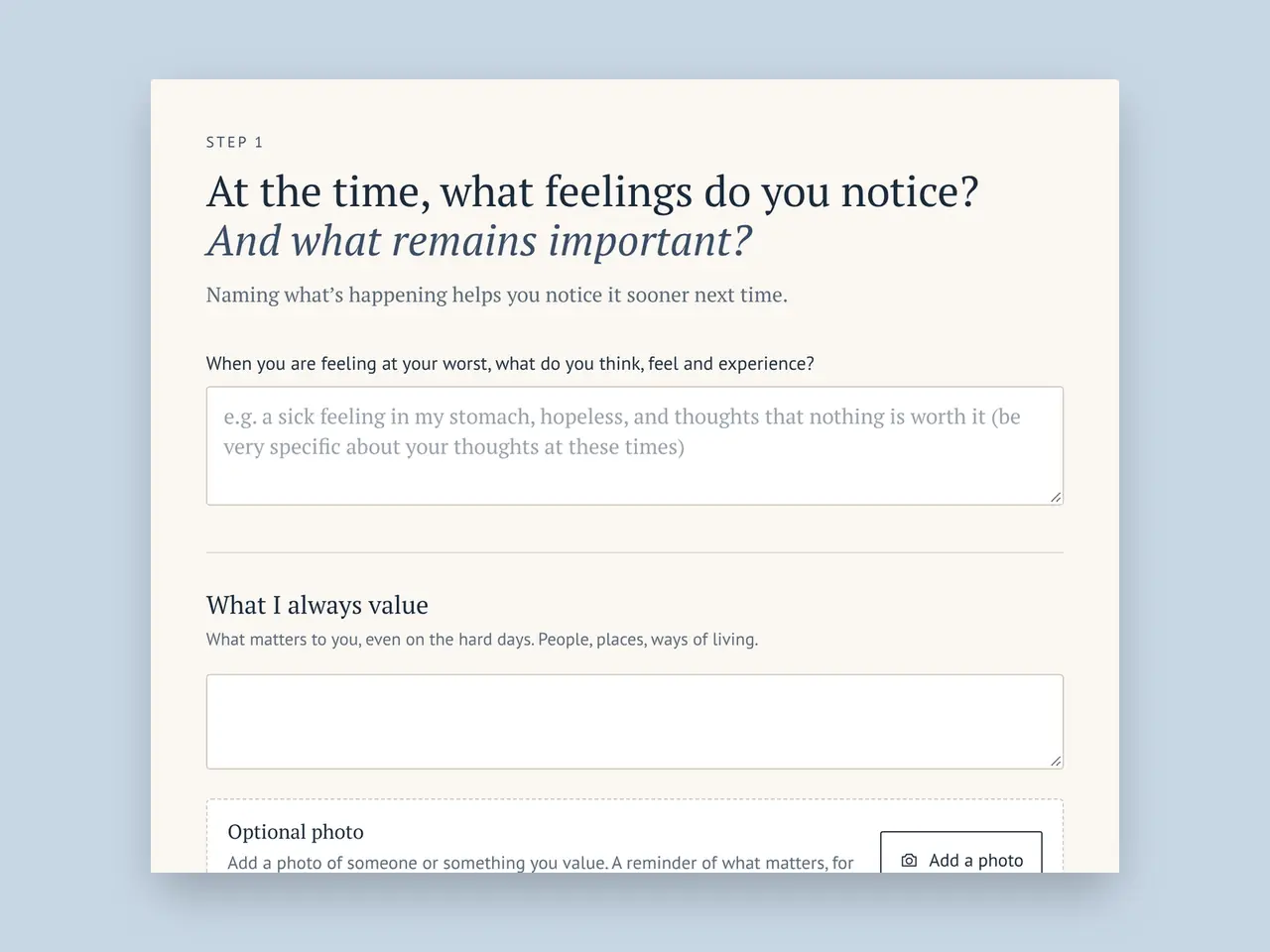

03 · Get unstuck from typical patterns
Running from pain makes sense.
Wanting to end your life can be understood in terms of needing to run away and escape from emotional pain. This is a well-known and common psychological process called experiential avoidance, and there are simple, effective psychological techniques to recognise and address these unhelpful patterns. Therapy is effective and can work quickly.
The two main strategies
Notice what your mind says
Increasing your awareness of your common thoughts: what your mind says to you. Take the check-in.
Make room for unwanted feelings
Reducing your avoidance of unwanted feelings, and gradually getting used to them.
04 · Keep in contact with important people
Find a connection. Be seen by others.
What people say helps the most is finding a connection, and being seen by others who understand.
Reach out to others in distress.
Send support messages by text or email. Remind people that you are there for them, that you are thinking of them, and that support is available.
Hope
People who have come through a suicidal crisis often say the thing that made the difference was hope, and the people who helped them find it again.
Being heard
Being met with warmth, attention and respect can bring back the will to keep going. Feeling heard and safe matters.
Belonging
Loneliness and feeling that you don’t belong are closely tied to suicidal thoughts. Feeling supported and connected is one of the strongest protections there is.
Equal footing
When people are treated as equals, without judgement or being brushed off, they find it easier to be honest about what they’re going through, and feeling some control again can be a reason to keep going.
See the New Zealand review of what helps people in crisis from Te Hiringa Mahara.

Start with a conversation. Private. Practical. Psychological.
If you know you’d like an appointment, you can book directly. If you’re unsure whether this is the right fit, you’re welcome to have a chat with me first — request one using the form and I’ll call you back.
In crisis? I provide crisis support — please book the next available appointment. For help outside usual work hours, see where to get urgent help.